Just last year, policymakers turned to real estate investors to rescue the housing market.
Fearing the foreclosure crisis could drag on for years, the
Federal Reserve advocated renting out foreclosed homes as a market-based solution. Government-controlled mortgage titan
Fannie Mae experimented with selling big pools of them to deep-pocketed buyers.
Few realized then that investors would respond with overwhelming force: Big and small players have injected billions into the market, racing one another to buy up foreclosed homes in post-crash markets. Wall Street launched a sophisticated industry based on buying and renting out homes in bulk. The suburbs of Southern California, Arizona and Nevada saw a virtual land run, creating frenzied demand that has pushed up prices more than 20% in a year.
Now the foreclosed homes in those markets
are almost gone — yet investors have kept buying, competing with individual buyers in standard sales.
The number of so-called absentee buyers, usually cash investors, has dropped slightly in Southern California since hitting a record in January. But they still account for more than 1 in 4 home purchases in the region. And just 8% of those deals were on foreclosed homes in June, compared with 25% a year earlier and a peak of 55% in February 2009.
"Everybody and their dog is an investor," said Dick Caley, a Long Beach real estate agent. "It has gotten to the point where I do not even return the call."
As it turned out, housing investors needed neither the prodding of the Federal Reserve nor the bulk foreclosure sales from Fannie Mae, which never materialized beyond the pilot phase. The single-family rental industry now has several major players in multiple markets, with some recently created companies trading publicly.
The mix of investors and their strategies are shifting, with large financial firms starting to pull back and smaller players moving in, looking to buy, fix and flip homes for a quick profit. But rapid price increases are making it harder for people to afford a house and qualify for a home loan.
And the short-term mentality worries some economists.
"Flippers are selling to other flippers, who are selling to other flippers, until there is nobody to flip the home to," said John Burns, a housing industry consultant in Irvine. "And that is when you have a big downturn."
The investor interest in regular home sales means everyday buyers are more likely to pay a premium for a house. But shoppers could benefit from a retreat by the institutional, buy-and-hold investors, who tend to compete more directly with regular buyers and pay higher prices than home flippers. Flippers need to buy homes below market value; investors planning to rent and hold the home can bank on long-term price appreciation.
"The buy-and-hold investors are the ones who really pose a threat to first-time buyers," said Sean O'Toole, chief executive of data firm PropertyRadar. "The buy-and-hold investor is leaving, and the flipper is in right now."
Flipper Jonathan Zadok still sees upside in the suburbs despite the lack of foreclosures. Zadok quit his job as an equity trader three years ago and plunged into the business of buying, renovating and reselling foreclosed homes in the Inland Empire. With the foreclosed bargains nearly gone, Zadok has started shopping in more established neighborhoods and buying more expensive homes, which carry more risk but add profit potential.
For now the work is exciting and interesting enough for Zadok to keep at it, he said.
"I love it, it's nonstop," he said. "Trying to find that next deal, selling that next house."
U.S. corporations, private equity firms and foreign investors remain a driving force in real estate, said Anthony Sanders, a professor of real estate finance
at
George Mason University. Those investors have been lured to U.S. real estate because financing costs have been so low.
But that could quickly change.
"This is not your father's housing recovery. In other words, this is not household-related; this is more of an investor recovery," Sanders said. "If interest rates keep rising, we will inevitably see the stock market pop, meaning go down, and with it will probably come the housing market."
Norris Group in Riverside — which holds regular, sold-out symposiums on real estate investing — begs to differ. The firm's president, Bruce Norris, recently told a packed room of investors at the DoubleTree hotel in Ontario that home prices had plenty of room to run, and that investing in California real estate was still a good bet. Housing has moved quickly from bottom to boom, but Norris believes prices in California
will keep climbing because housing remains affordable to a large percentage of buyers.
Aaron Norris, marketing director for the group, said investors were doing more dramatic renovations to unlock the value in homes. Rather than cosmetic upgrades, they are adding square footage and in some cases even looking to buy land for new construction.
With the continuing shortage of home supply, investors are getting even more aggressive, knocking on doors and sending out mailings to attract sellers, Norris said.
"We're purchasing from people directly,"
Norris said. "We've been teaching people for the last few years this is where the deals would come from."
There are other signs of the shift in investors' focus. O'Toole recently expanded his company and changed its name from ForeclosureRadar to PropertyRadar.
His firm started out as a data service marketed directly at auction investors, those tracking sales on the courthouse steps. PropertyRadar has expanded features for real estate agents and investors hoping to find properties before they hit the market.
Experienced flippers say the increased competition is forcing them to change tactics.
Brian Coomans, owner of investment company
GGB Properties Inc. in Long Beach, said he considered himself a "production investor" when he first started, finding cheaply priced foreclosed homes and fixing them up for a quick profit. But that's an easy business to enter, and Coomans soon faced a lot of competition. So, like Zadok, he has been hunting for select deals in pricier neighborhoods, buying homes that have just been inherited, for instance.
He tries to forge tight relationships with real estate agents to get an inside track on sales.
"The margins are still the same, but you have to hunt harder for them and you can't count on a certain volume of deals," Coomans said.
Zadok remembers 2009, when there were lots of properties and not a lot of buyers. The next year he hopped into the business, choosing San Bernardino because of the high number of foreclosures there.
Homes were boarded up, lawns were overgrown or dying, and pride in homeownership was gone, he recalled. Those days are over, and now he sees a short window of time left to make money.
"I know I am not going to be doing this forever," he said. "I have maybe a one-year window, a two-year window to be flipping homes like this."
















 and found that many will only net you between 60 and 80 percent of what you paid for them. Even the most desirable renovation like a bathroom or kitchen remodel are basically break-even upgrades. Rather than dump a bunch of money on a home you’re trying to sell, stick to small improvements like a fresh coat of paint or some basic lawn care, and leave the major renovations to the new homeowners.
 The Fed recently announced they would continue their current pace of purchasing bonds until the economy was stronger. This bond purchasing program is the reason that mortgage interest rates are at historic lows. Rates began to increase over the last several months just on the anticipation that the Fed would announce that they would be reducing the level of bond purchases last month. When that didn’t happen, rates actually decreased (4.50 to 4.37).
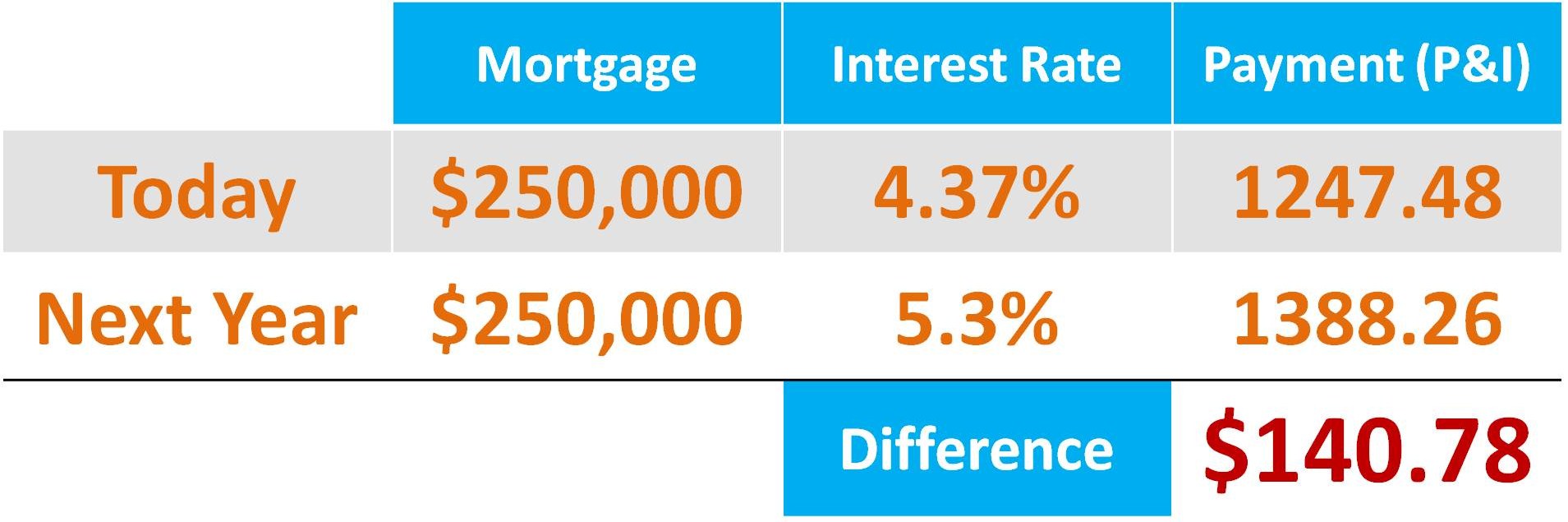 A buyer should take advantage of the current window of opportunity before it is too late.
